
The Truth Trail
Philadelphia, PA
Welcome to the Truth Trail. You will stroll through Philadelphia’s most historic neighborhoods and cover almost two miles. It will take about 1.5 hours with stops. Please enjoy the shops and cafes along the way
Philadelphia is filled with stories we celebrate, stories we overlook and stories we’re still learning how to tell honestly.
This trail adds truths — it doesn’t replace them.
Truth exists all over this city and country. Most of us just inherit incomplete versions of it.
Some of the truths you’ll encounter are familiar. Others may feel uncomfortable. None of them tell the whole story on their own.
This trail is an invitation to hold those truths together.

1.
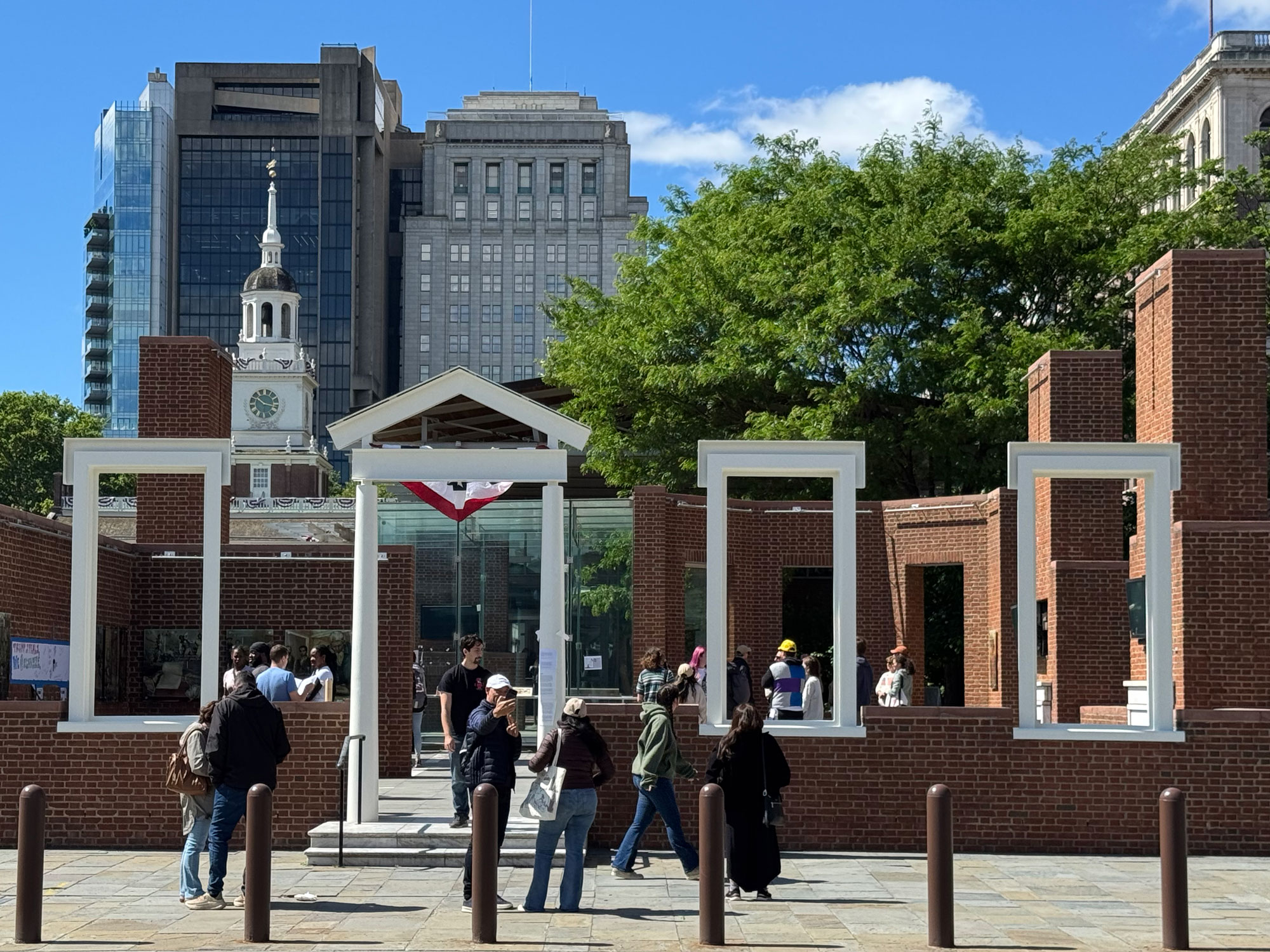
President’s House Site
524 Market Street (6th and Market)
You are standing at the site of George Washington’s House.
To your right is the Liberty Bell. In front of you is Independence Hall. Behind you is the National Constitution Center.
This place is often celebrated as the birthplace of American democracy. Here, the ideals that shaped a new nation were debated, declared and advanced. We know the words: “We hold these truths to be self-evident” and the promise of “life, liberty and the pursuit of happiness.”
For generations, visitors learned about this place as a center of the new American government.
More recently, another part of the story came into view.
Historians and archaeologists confirmed that enslaved men and women lived and worked here as part of George Washington’s household. They had always been part of this history. The question is why their story remained largely absent from public memory for so long.
Some believed this site should focus primarily on the founding of the nation. Others argued that the presence of slavery could not be separated from that history.
This place holds both truths.
It is a site where the ideals of liberty were proclaimed. It is also a site where people were denied that liberty.
Reflection
When new information challenges a familiar story, should the story change?
Directions to next stop Reflection
~5 minutes (.4 miles)
Walk east along Market Street toward 4th Street.
Turn left onto 4th Street.
Walk one block to Arch Street and turn right.
Follow the brick wall to the Arch Street Friends on your right.
references
2.
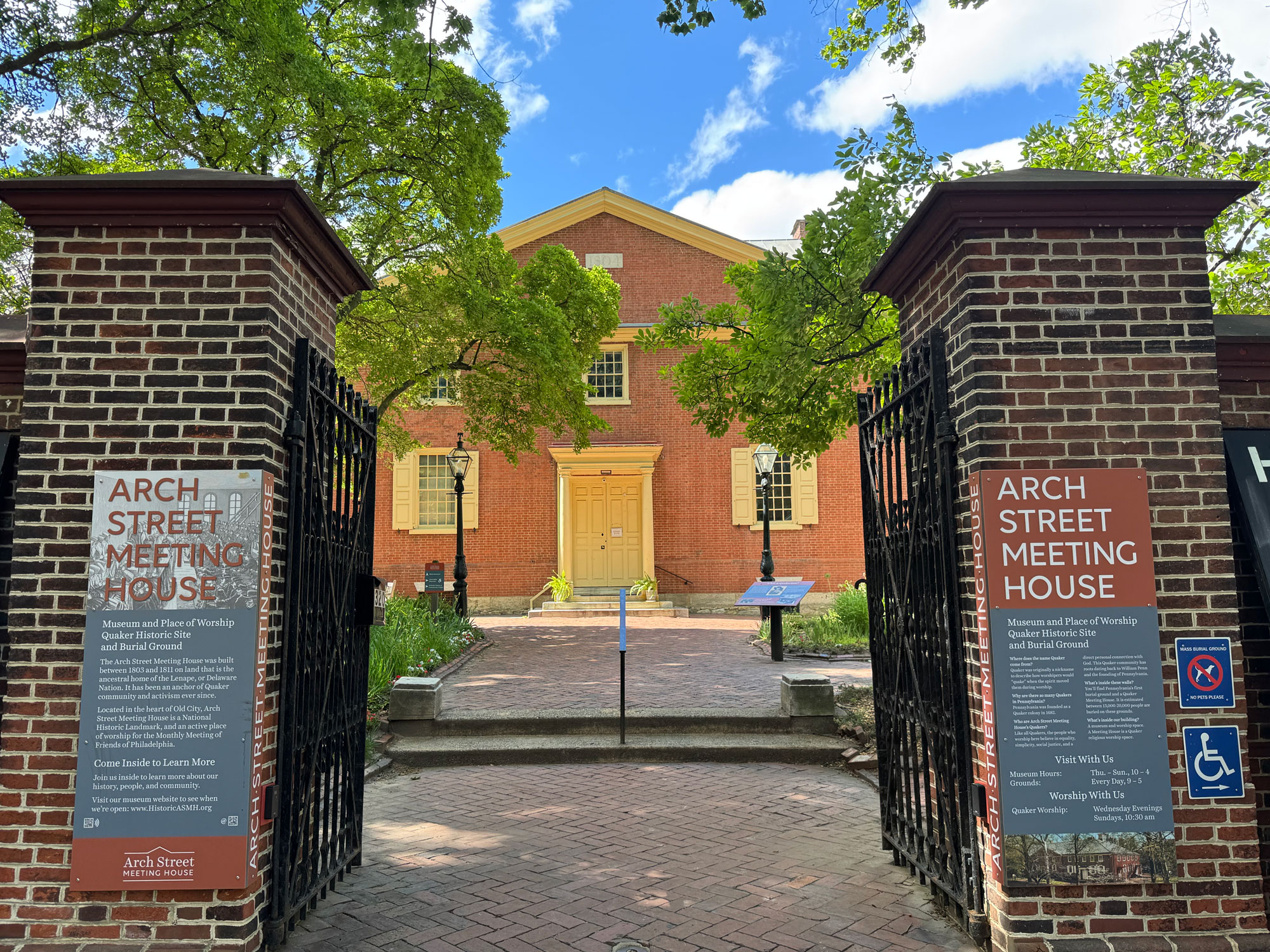
Arch Street Friends Meeting House
(Founded 1682)
320 Arch Street
You are standing outside one of the oldest continuously active religious sites in America.
Quakers helped build the moral case against slavery in colonial America. In 1688, Quakers in Germantown authored what is widely considered the first formal protest against slavery in the American colonies. Over time, Quaker communities became some of the nation’s strongest advocates for abolition.
Yet that story is incomplete.
Many Quakers owned enslaved people before their communities formally rejected the practice. Even after opposing slavery, many Quaker meeting houses maintained segregated seating. Black worshippers were often welcomed, but not fully included.
This place holds both truths.
The Quakers helped move America toward freedom while struggling to fully live their own ideals of equality.
Reflection
What does it look like to remain committed to ideals that your community has not yet fully achieved?
Directions to next stop Reflection
~6 minutes (.2 miles)
Head back to 4th Street. The Union Fire Company is on the corner - the first volunteer fire company in the United States.
Turn right on 4th Street.
Walk several blocks toward a bridge. You’ll walk under it. St. George’s is on your right.
references
3.
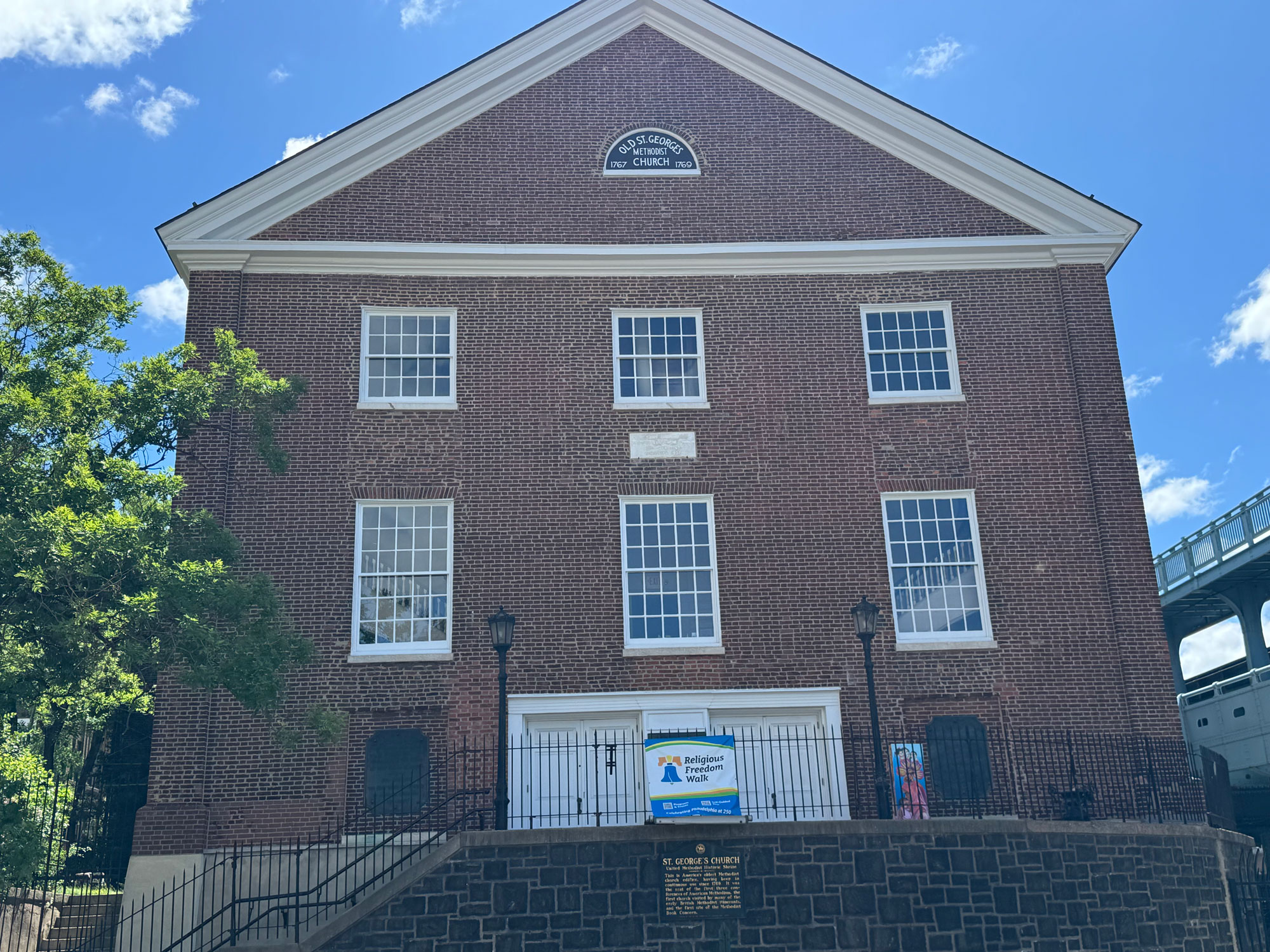
St. George’s United Methodist Church
235 N 4th Street
Founded in 1767, St. George’s is the oldest Methodist house of worship in continuous use in the United States. Richard Allen and Absalom Jones became the first African Americans licensed by the Methodist Episcopal Church here.
Yet there is another story.
As more Black Philadelphians joined the congregation, they increasingly faced discrimination and segregation. When Black worshippers were directed to separate seating during worship, Allen, Jones and many others chose to leave.
Their departure helped lead to the creation of the Free African Society, Mother Bethel and eventually the African Methodist Episcopal Church, the first independent Black denomination in the United States.
Mother Bethel still stands today at 419 South 6th Street.
This place holds both truths.
St. George’s helped launch one of the most influential religious movements in American history. It also forced Black Philadelphians to build institutions where they could worship, lead and flourish on their own terms.
Reflection
What can be created when people who are excluded decide to build something new?
Directions to next stop Reflection
~8 minutes (.4 miles)
Turn around and head back under the bridge. Turn left on Race Street. Walk one block. Turn right on 3rd Street. Continue South four blocks to Market Street. Turn right. Franklin Court is on your left, right across the street from Doggie Style, an awkward, modern truth.
references
4.
Franklin Court
318 Market Street
This is Franklin Court, where Benjamin Franklin lived and worked.
Franklin helped shape many of the ideas and institutions that define Philadelphia and America. He was a printer, inventor, civic leader, diplomat and one of the most influential voices of the founding era.
Yet there is another story.
Franklin participated in and benefited from slavery. Enslaved people lived and worked in his household. His newspaper carried advertisements for the sale of enslaved people and notices seeking the return of those who escaped.
Over time, Franklin’s views changed. Influenced by abolitionists and growing debates about liberty, he came to see slavery as incompatible with the ideals he helped promote. In the final years of his life, he became president of Pennsylvania’s abolition society and publicly advocated for ending slavery.
This place holds both truths.
Franklin helped shape a nation built on ideals of liberty while benefiting from a system that denied liberty to others. His story reminds us that history is rarely as simple as heroes and villains. People can leave extraordinary legacies while falling short of their own ideals. They can also change.
Reflection
What do we do with heroes whose lives hold contradictions?
Directions to next stop Reflection
~4 minutes (.2 miles)
Walk through Franklin Court and exit on Chestnut Street. Turn left.Walk one block to 3rd Street and turn right. First Bank of the United States is on the right.
references
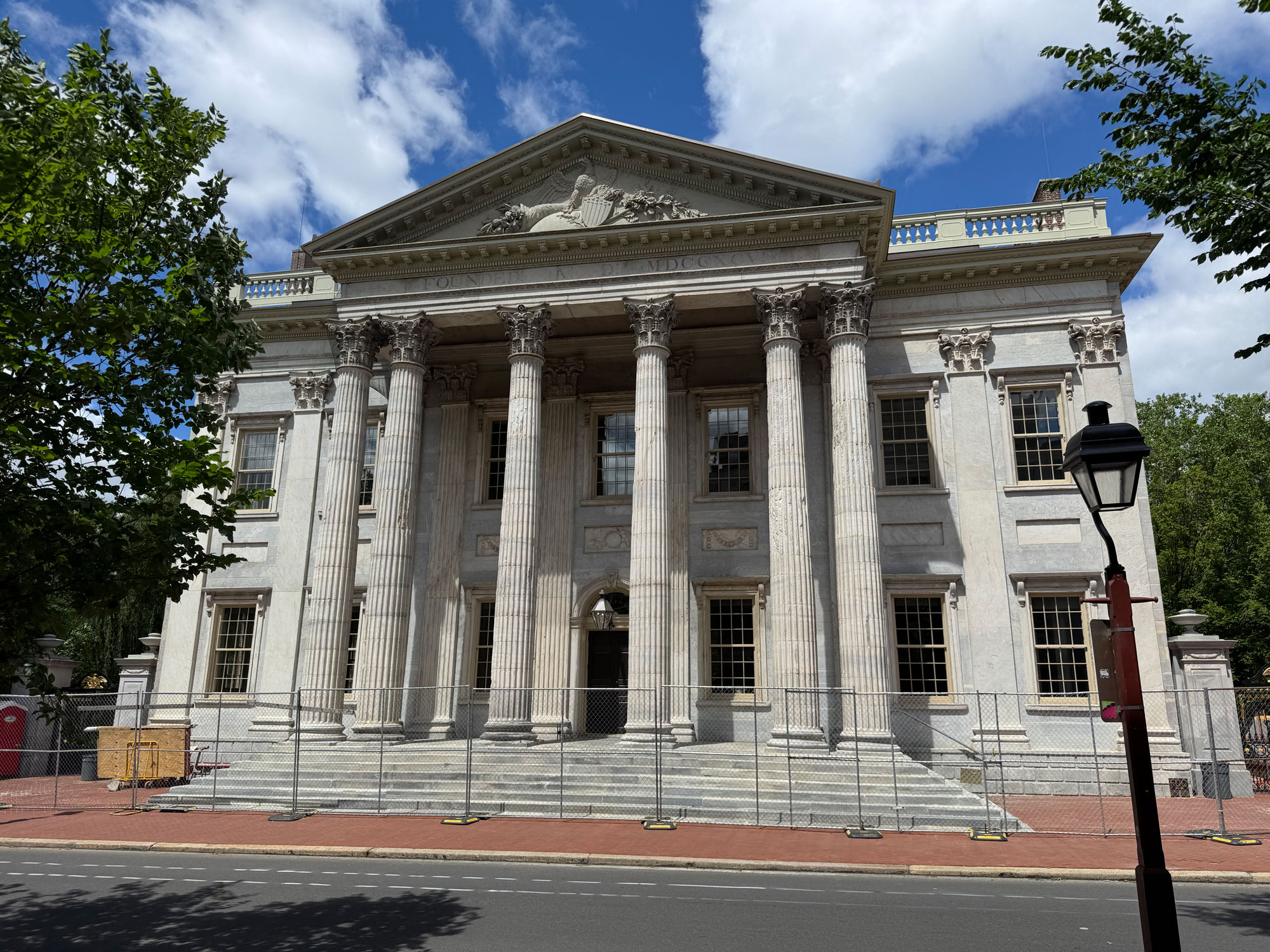
5.
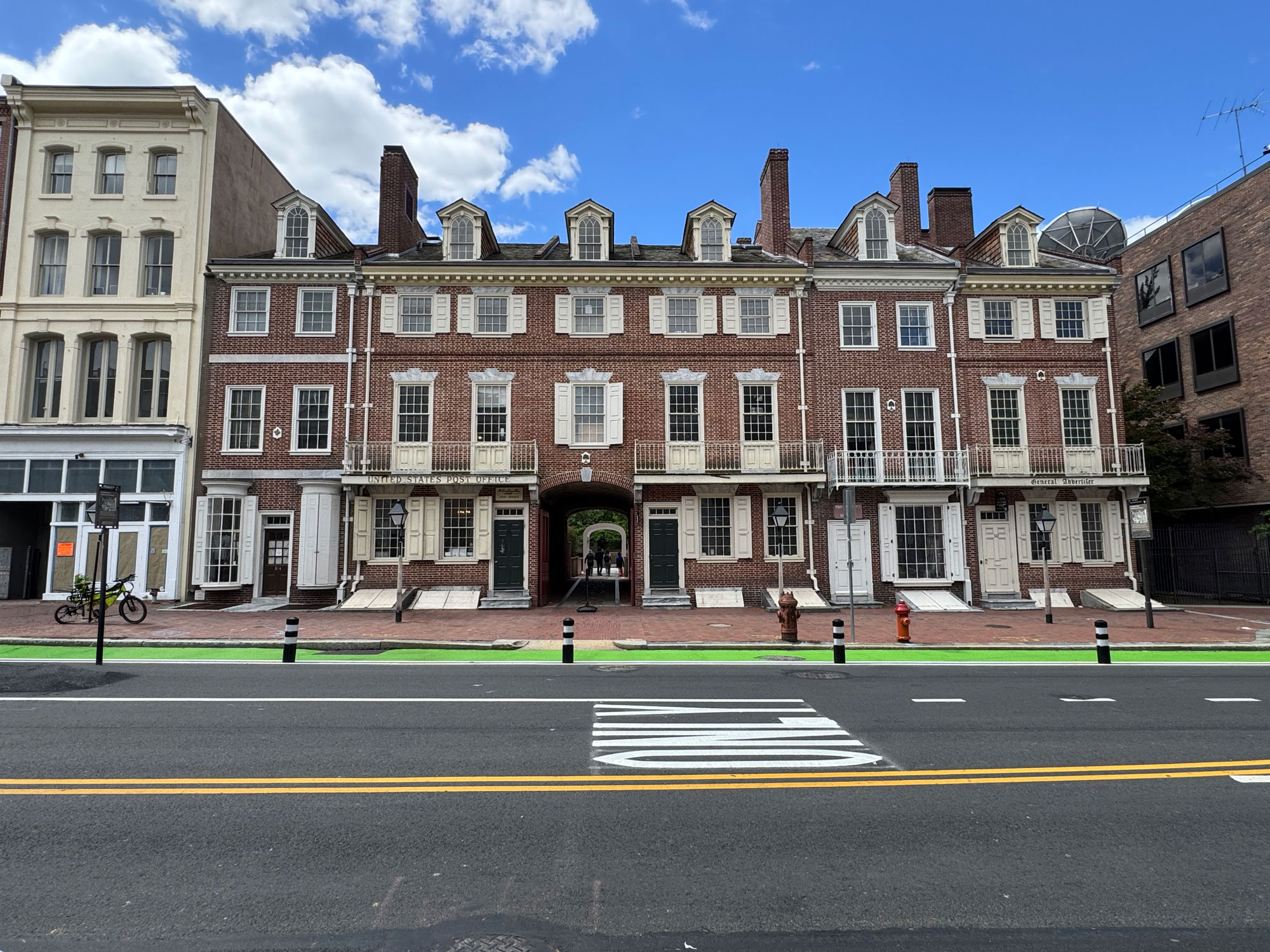
Girard Bank Site
(First Bank of the United States)
120 South Third Street
You are standing in front of the First Bank of the United States, one of the most important financial buildings in early American history.
It was created as part of Alexander Hamilton’s vision for a stable national economy. When its charter expired, it became the banking house of Stephen Girard, who helped finance the nation during the War of 1812 and became the wealthiest man in America.
Girard’s wealth helped fund public works, civic projects and Girard College. His name remains woven throughout Philadelphia nearly two centuries after his death.
But another truth existed alongside that success.
Historical records show that Girard owned enslaved people, and much of his fortune was built within a global economy deeply connected to slavery. Even Girard College was originally restricted to “poor white male orphans” and remained closed to Black students for more than a century.
This place holds both truths.
The institutions Girard helped build continue to benefit Philadelphia. His success was also shaped by systems that denied freedom and opportunity to others.
Reflection
How should we remember achievements that were made possible by systems that harmed others?
Directions to next stop Reflection
~3 minutes (.2 miles)
Turn around and head back to Chestnut Street and turn right.
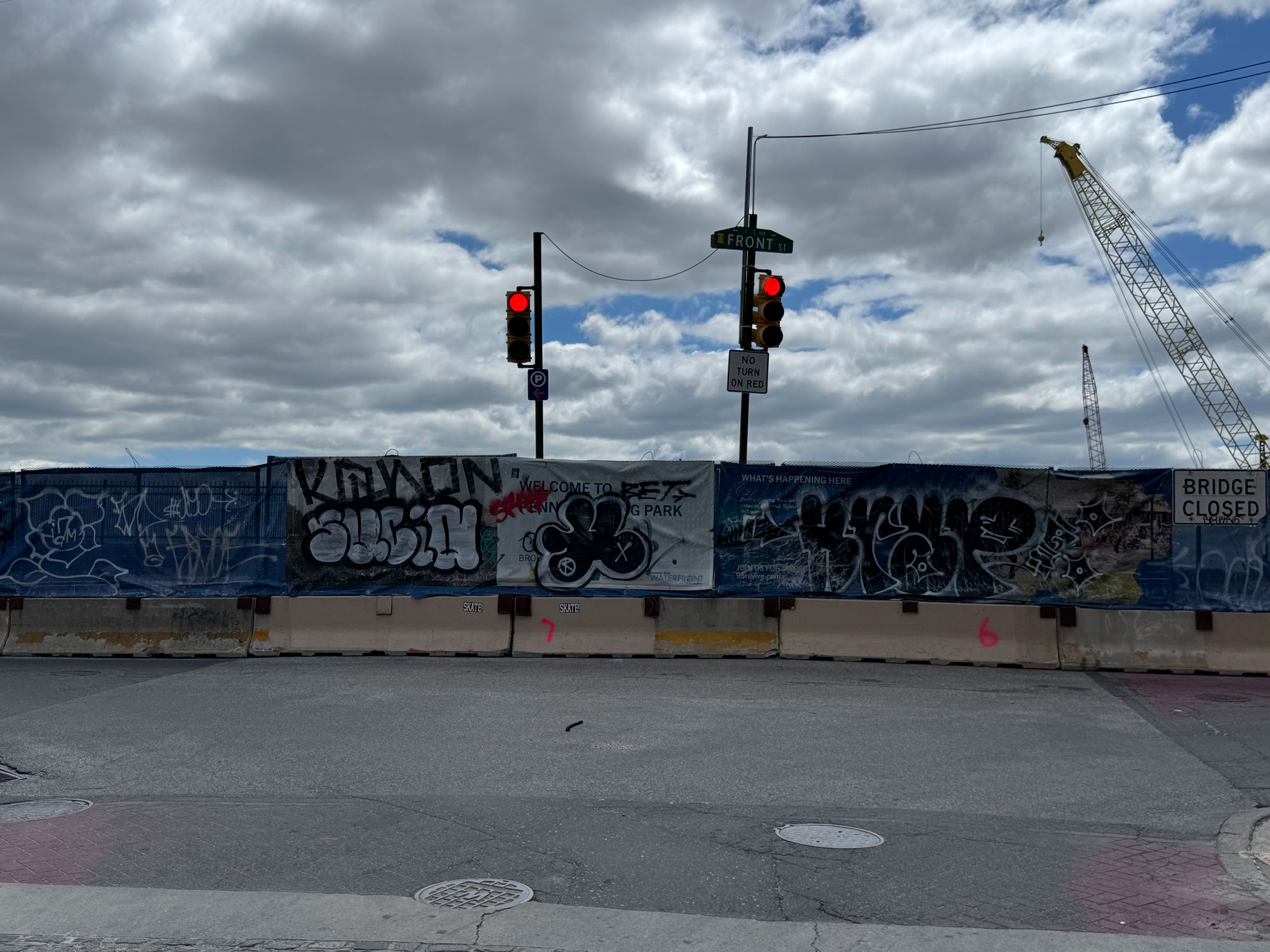
Walk two blocks until you arrive at the Front Street. The Delaware River can be seen in the distance. The footbridge to the river is currently under construction.
references
6.
Chestnut Street Pedestrian Bridge (Delaware River)
You are looking at the Delaware River, one of the busiest commercial corridors in early America.
The ships that passed through this waterfront carried goods, wealth, ideas and people from around the world. They also connected Philadelphia to an Atlantic economy deeply intertwined with slavery. Sugar, cotton and other products produced by enslaved labor moved through the same trade networks that helped make Philadelphia prosperous.
Yet another story unfolded here.
James Forten was born free in Philadelphia in 1766. After serving during the Revolutionary War, he apprenticed as a sailmaker and eventually purchased the business where he worked. Along this waterfront, Forten built one of the most successful sailmaking companies in the United States.
His sails powered ships that traveled the same waterways that enriched merchants, bankers and shipowners throughout the Atlantic world.
But Forten used his success differently.
He built a racially integrated workforce, invested in Black education and civil rights, supported abolitionist causes and became one of the most influential Black leaders in Philadelphia.
This place holds both truths.
The Delaware waterfront helped sustain an economy connected to slavery. It also created opportunities for people like James Forten to build wealth, exercise leadership and challenge the inequalities around them.
Reflection
What responsibility comes with success in a system that is not equally open to everyone?
references
The Walk Back
Turn around and walk up Chestnut Street. You are now about five blocks (.4 miles) from Independence Hall where the tour began. Consider some of the truths you’ve encountered.
Some may have complicated stories you thought you knew. Others may have deepened your appreciation for the people and institutions that helped shape this city and country.
Some reveal contradictions. Others reveal courage. Some expose failures. Others uncover progress.
Our goal should not be to decide which truths belong and which do not. It is to consider as many of them as we can discover because people, nations and history are rarely simple, and the stories we inherit are often incomplete.
The challenge is not to replace one story with another. It is to hold more of the story at the same time.
As Independence Hall comes back into view, consider:
What truths have been added to your understanding today?
What truths might still be waiting to be discovered?
And what are the truths we hold to be self-evident?